

Loudon Energy Analytics is commercializing the ORFEUS (Operational Risk Financialization of Electricity Under Stochasticity) software system developed by researchers at Princeton University.
Loudon Energy Analytics equips companies to thrive in a rapidly changing electricity market landscape. Loudon is launching the commercial application of the ORFEUS (Operational Risk Financialization of Electricity Under Stochasticity) software system developed by researchers at Princeton University.
Loudon Energy Analytics has obtained exclusive global commercial rights to the ORFEUS software developed by researchers from the Operations Research and Financial Engineering (ORFE) Department at Princeton under the DOE ARPA-E funded Perform Project. Professors Rene Carmona and Ronnie Sircar of Princeton’s Operations Research and Financial Engineering Department have joined the Advisory Board of Loudon Energy Analytics.
DOE ARPA-E Perform Project
Professors Carmona and Sircar developed ORFEUS under the DOE ARPA-E (Perform) program. The ORFEUS software uses stochastic analysis to optimize the risk profile of the grid. It incorporates a methodology to quantify, allocate and account for the risk introduced to the grid from the increasing penetration of intermittent renewable resources such as wind and solar generation. ORFEUS’s capabilities can support system operations, system planning, asset bud optimization and minimize carbon emissions.
ORFEUS Software
ORFEUS fills an emerging market need for stochastic modeling of the grid, where current models used by both grid operators and grid planners are not adequately equipped to represent the volatility in system conditions introduced by increasing levels of intermittent renewable resources. ORFEUS uses a full fundamental representation of the grid, incorporates stochastic scenario development and uses financial engineering concepts for stochastic optimization. It may be used by asset owners to optimize three different objectives:
- Improving reliability by minimizing the probability of a grid outage due to imbalance in supply and demand;
- Improving profitability by maximizing market revenues; and
- Improving environmental performance by minimizing the carbon footprint of the generation fleet.
In addition, ORFEUS can provide expected distributions of Locational Marginal Prices (LMPs) through time on an hourly basis at a nodal level and Marginal Emission Rates (MREs) through time on an hourly basis at various nodes.
ORFEUS Applications
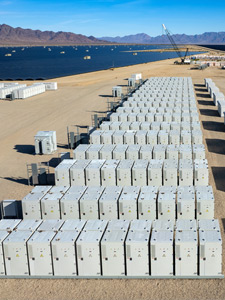 Storage Revenue Optimization
ORFEUS may be used to structure a market revenue maximizing bidding strategy for a storage asset. ORFEUS provides storage asset owners with system risk analysis tools to structure wholesale market bids that reflect the risk of increased stochasticity in the system. It allows storage asset owners to derive an optima schedule balancing market revenue, reliability and environmental considerations.
For market revenue maximization, ORFEUS identifies Locational Marginal Price (LMP) spikes and troughs in space and time to identify optimal battery discharging and charging locations and times. ORFEUS schedules a storage unit in the day-ahead market for the hours the LMP is expected to be highest. Conversely, ORFEUS charges the storage unit for the hours where the LMP is lowest as predicted by a stochastic model and thereby minimizes the cost of charging the battery. For the real-time market, ORFEUS can inform when it is prudent for the storage owner to deviate from the day-ahead bid to capture revenues from price spikes which may develop in real time.
Balancing Data Center Loading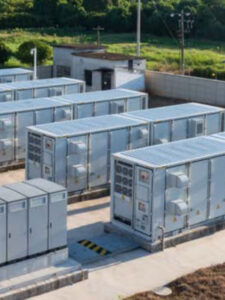
The Artificial Intelligence revolution involves consumption of prodigious amounts of power by server farms that are at the heart of the AI learning models. AI is adding to the demands on a stretched grid powered increasingly by intermittent and distributed resources. All this is making life very difficult for grid operators and planners who have the responsibility to “keep the lights on” thorough all this uncertainty. However, AI data centers operating in ‘learning mode’ offer a unique opportunity for flexible scheduling. By participating in ISO/RTO Demand Response programs, these asset owners can mitigate grid strain. Loudon’s stochastic analysis, powered by the ORFEUS system, provides the predictive capabilities necessary for data center owners to anticipate peak system conditions and optimize their electrical draw in alignment with real-time grid requirements.
Optimizing Micro-Grid interactions with the wholesale market
Given the stochastic nature of grid conditions, micro-grids, municipalities and load serving entities have to be increasingly sophisticated in their interactions with the ISO/RTO run wholesale power markets. ORFEUS and related software tools offered by Loudon may provide powerful insights to micro-grids and enable them to maximize their cost savings. The features of these stochastic tools include:
- Peak Prediction and Capacity Market Optimization: The stochastic analysis allows the micro-grid to predict the day and hour of monthly coincident peak for the micro-grid system. These tools allow the optimization of a micro-grid’s storage and other flexible resources to enhance capacity market performance.
- Day Ahead Market Simulation and Energy Market Optimization: ORFEUS performs stochastic simulations of the ISO/RTO administered day-ahead market. ORFEUS may be tailored to optimize a micro-grid’s day ahead energy transactions with the NYISO wholesale markets.
- Real Time Ahead Market Simulations and Optimizations: The day ahead ORFEUS model outputs may be used together with real time system condition and weather updates to develop real-time energy forecasts.
- Modeling of ancillary services and co-optimization with the energy market: Building on day-ahead and real time energy market optimization, Loudon is developing capabilities to co-optimize energy, reserves and regulation offerings of the mic-grid with the whole-sale market operator.
With added volatility of locational marginal prices (LMPS) introduced by increasing levels of intermittent renewable resources, existing bidding strategies adopted by conventional resources may become suboptimal over time. Asset owners of conventional generation fleets may opt to use ORFEUS to evaluate future revenue profiles of their existing assets and fine tune their day-ahead and real-time bidding strategies.
Helping the Grid Operator keep the lights on
Today’s grid conditions are far less predictable than what the grid operators are used to. Rapid penetration of large quantities of intermittent renewable generation requires grid operators to ramp down or ramp up fossil or storage units to meet a highly variable net energy demand. The Artificial Intelligence revolution is spawning server farms that consume prodigious amounts of power. All this is making life very difficult for grid operators and planners who have the responsibility to “keep the lights on” thorough all this uncertainty.
ORFEUS can help Grid Operators manage grid stochasticity better and position the system to ride out the rapid swings in net demand. To maintain system security, ORFEUS uses statistical and probabilistic models and mitigates system reliability risks by using powerful stochastic optimization techniques. Providing grid operators with system risk analysis tools will make wholesale markets more reliable by allowing the grid operator to develop optimal schedules for storage, demand response and other flexible resources that reflect stochastic conditions of today’s power grid.